
Sustainability Is Evolving, and the Tourism Sector Must Evolve with It
Booking.com and Expedia Group have already published their 2023 reports on travelers’ priorities when evaluating their travel options. The trend is clear, but it surprises few.
Corporate social responsibility has transitioned from the Renaissance and the prominent role of patrons in the 15th century, through the Industrial Revolution and the great philanthropists who contributed to the construction of great universities, libraries, and hospitals that endure to this day.
With the increasingly clear evidence of the impact of businesses on climate change, people are starting to talk about environmental sustainability. Slowly. Often with trepidation. In a kind of dance between what companies voluntarily assume (or pretend to assume), and what governments impose through laws and regulations, sometimes more effectively than others.
Companies fear, almost always with good reason, the impact that sustainability initiatives can have on their businesses, since ultimately it is their investments that bear the risk of this kind of laboratory, which aims to analyze the viability of new ideas through trial and error, without taking into account the legal, marketing, and financial considerations that are also part of the process. The natural response is to exclude themselves when the opposite should be true: to participate and lead.
Many companies found a shortcut in greenwashing; however, the democratization of information through social media and the internet has had a harmful effect on brands, which have been slow to realize that this practice not only fails to produce the desired effect but also discredits them in the eyes of their audiences, at least those who care about the issue, which, as reports from Booking.com and Expedia Group show, are increasingly numerous.
In 2009, while pursuing my master's degree in tourism at the University of Alcalá, I encountered a fascinating subject: Social Market Economy. It was the first time I had analyzed sustainability as an integral part of the business, not just the market. At a micro level, it's somewhat similar to Michael Porter and Mark Kramer's concept of Shared Value. And I believe there's a lot of this in the current understanding of sustainability. I think sustainability should be understood as a business strategy for managing environmental and social risks. It's also a tool that enhances a company's ability to manage relationships with its high-value strategic stakeholders, and therefore has the potential to add value to the brand.
In the tourism sector, especially in the sun and beach segment, sustainability must be considered an essential component of investment. Conducting studies on the physical and chemical characterization of the coast or coastal dynamics should not be seen merely as a contribution to the national or global environmental community; they are fundamental to understanding the context in which a multi-million dollar investment is being made, an investment that will remain in place for years and is intended to be profitable in the long term. Therefore, it is as basic an exercise as a projected income statement or a tourist profile analysis.
But sustainability isn’t just a management strategy that makes sense. Each year it becomes clearer how the market is increasingly demanding to know how the tourism companies it uses operate, prioritizing those that demonstrate a greater commitment to sustainability, to the extent their budget allows. The Expedia Group Sustainable Travel Studies report states that 90% of consumers look for sustainable options when traveling, and continues:
"While some people may not want to compromise on cost, a larger number say they are willing to sacrifice convenience and comfort if they know they are making choices that are ultimately better for the planet. If you offer sustainable options, activities, or services, be sure to communicate this: two out of three consumers want more sustainability information from accommodation and transportation providers to help them make informed choices—a clear opportunity for travel companies." Expedia Group, user review data, January to September 2022
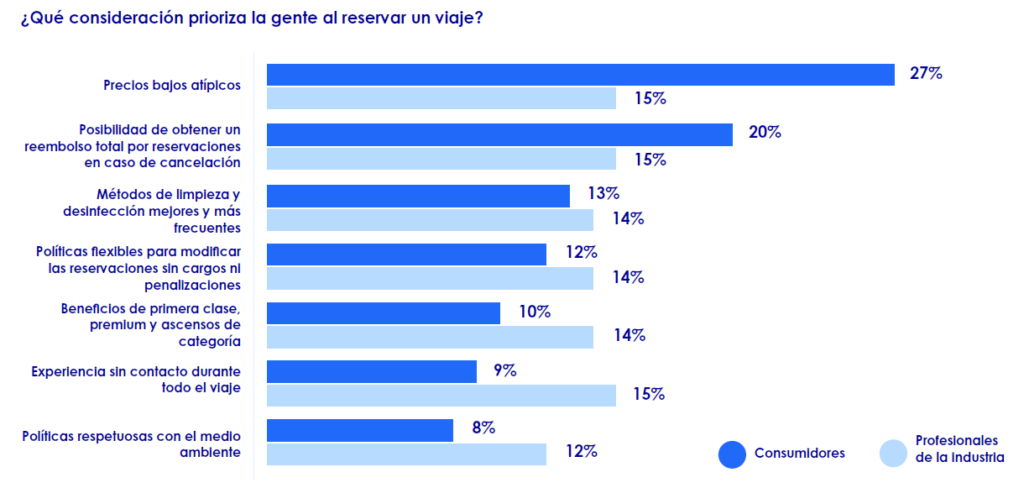
"56% of travelers believe there are not enough sustainable travel options, while 75% want travel companies to offer more sustainable travel options (69% in 2022). Despite their good intentions, 45% of travelers don't know where to find more sustainable options. For example, 74% seek authentic experiences that are representative of the local culture, but in stark contrast, 43% don't know how or where to find these tours and activities that are guaranteed to benefit the local community."https://news.booking.com/es/informe-de-viajes-sostenibles-2023/


Fortunately, in our country, more and more highly skilled professionals are being trained with the ability to support companies, not in pretending to be sustainable, but in designing a reliable and coherent plan, adapted to their unique reality and that truly adds value to their processes and their brand, protecting their tangible and intangible assets and guaranteeing long-term profitability and competitiveness.
Our sector deserves all the accolades its performance over the last 30 years has inspired. We have certainly been the driving force behind our country’s development—an undeniable development, more than evident and recognized both nationally and internationally. It is time to look to the future, supported by the solid foundation laid by our founders, to maintain what has been done well and improve what needs improvement.
Our tourism development model can and must improve its environmental and social impact on host communities. It is the duty of company executives and sector regulators to restructure the processes that need redefining to ensure the necessary changes that will make ours a better business for us, for the communities, and for the country. And if that isn’t our mission as a collective, then I can’t think of any other worthwhile one.