
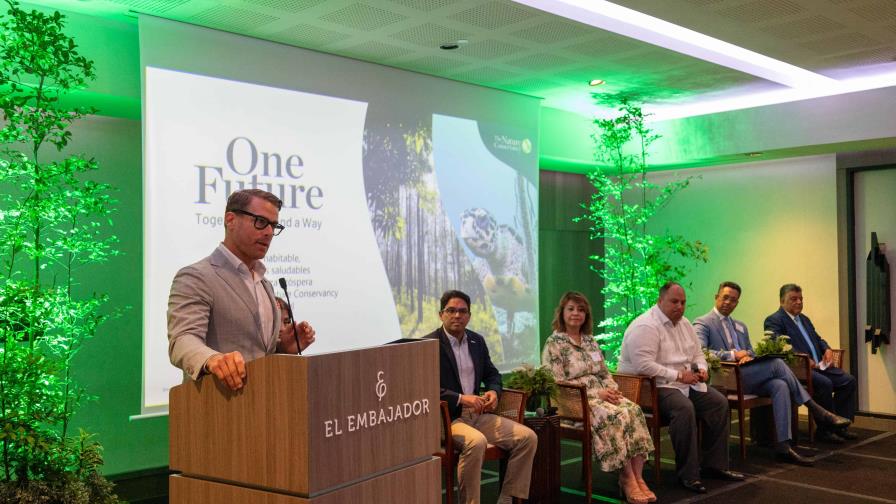
Jake Kheel, vice president of the Puntacana Group Foundation, during the panel “Private Sector Leadership in Conservation in the Dominican Republic” at the TNC Conservation Summit. (LUDUIS TAPIA)
Dominican Republic has to solve the lack of continuity in the environmental policies which is recorded with the changes in public administration, to ensure that the funded projects can move forward and guarantee the environmental conservation.
This was indicated Francisco Núñez, director for the Central Caribbean, and Carlos García, director for Dominican Republic of The Nature Conservancy (TNC), an entity that has been promoting for 30 years conservation projects related to the protection of marine ecosystems, green infrastructure and access to water.
TNC representatives expressed themselves in those terms after the Conservation Summit “Funding a Positive Future for Nature in Dominican Republic“, in which topics such as innovative financing mechanisms and long-term conservation solutions.
García maintained that a environmental project It may start well; however, “after six or eight months it loosens up, things get relaxed and it starts to fade (…) that’s a great challenge“
In that regard, Núñez cited a project promoted for the zoning of no-fishing areas in Samaná Bay. “It represented several years of work and investment… all of that was lost with a change of minister,” he explained.
Initiatives for the SINAP
One of the central themes of the summit was the presentation of Financial Program for Retentionan initiative that would boost the operation of National System of Protected Areas (SINAP).
“The idea is to analyze the financial gap who has the management of the system protected areasto see how much is being invested today with public funds, what can be improved with sustainable mechanisms over time and project it into a horizon of 10, 20 or 30 years“,” he explained Carlos García.
He added that this type of mechanism —which has been promoted in countries such as Ecuador, Colombia and the Bahamas— requires not only multimillion-dollar philanthropic investments, but also state guarantees on institutional continuity.
TNC representatives indicated that the program is in its early stages and that the organization is collaborating with the Ministry of Environment in identifying that “financial gap“and in the design of realistic solutions that the country can undertake.
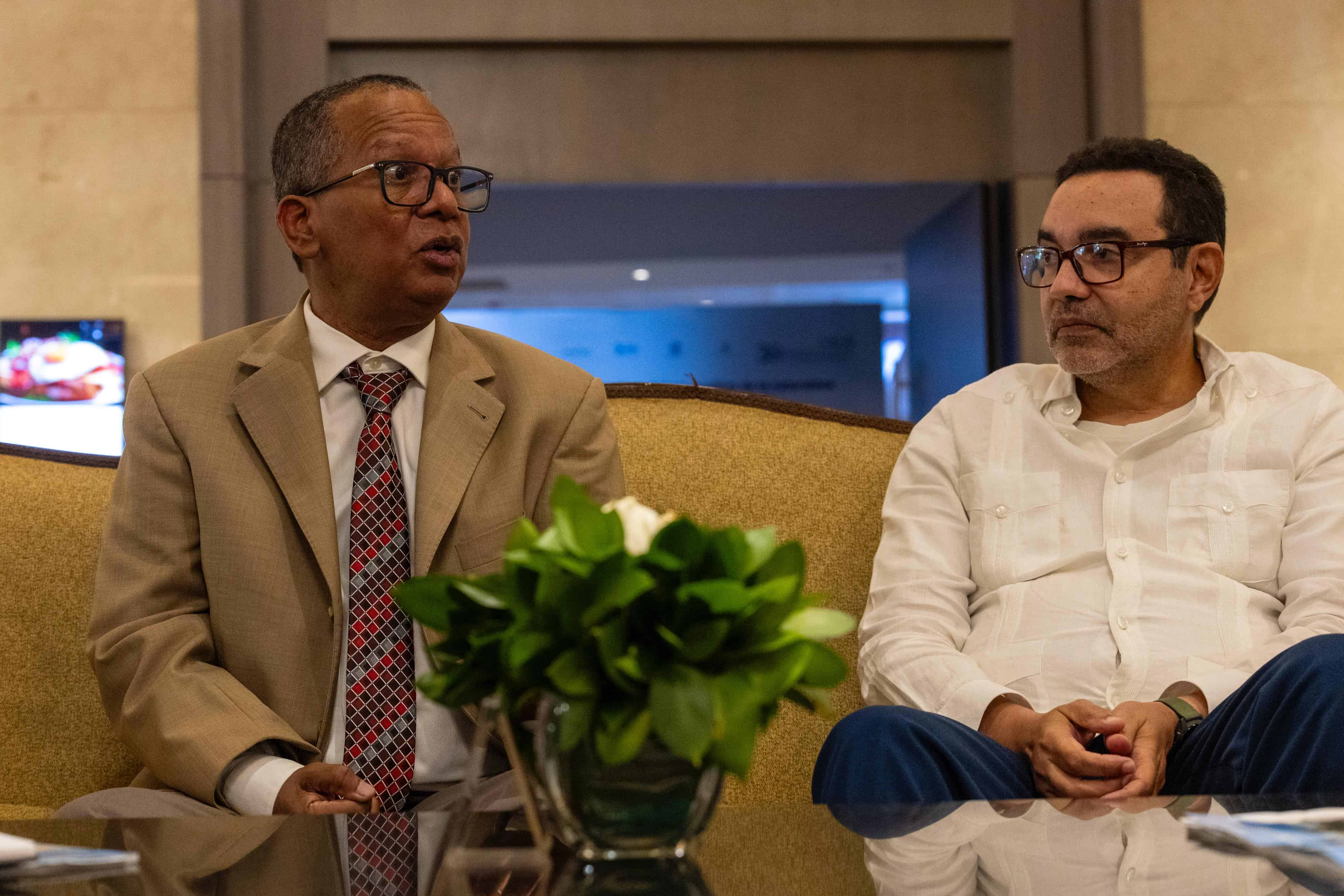 Francisco Núñez, director of The Nature Conservancy for the Central Caribbean, and Carlos García, director of The Nature Conservancy (TNC) in the Dominican Republic. (LUDUIS TAPIA/DIARIO LIBRE)
Water funds
Within the framework of the summit, The Nature Conservancy He cited another of his pillars of action in the country: the implementation and consolidation of the Water Fundsmechanisms that combine conservation, water management and community participation. Dominican Republic It has two funds of this type: Yaque del Norte and Santo Domingo.
“They have already moved beyond the stage of uncertainty. They are a long-term reality. They have trusts, self-sustaining projects, public-private partnerships, and a solid scientific foundation,” he explained. Carlos García.
He noted that both funds receive annual contributions from more than 30 Dominican companies, strengthening pioneering green trusts in the country. These funds finance projects that not only restore ecosystems—more than 3,000 hectares of deforested areas—but also directly benefit local communities..