Promiches in Support of Sea Turtle Conservation
The El Seibo-Miches Hotel and Tourism Association (Promiches) is proud to share the results of its Sea Turtle Monitoring and Protection initiative in Miches, supported by the Ministry of Environment and Natural Resources, in the task of preserving sea turtle species during the 2021 nesting season at Esmeralda Beach.
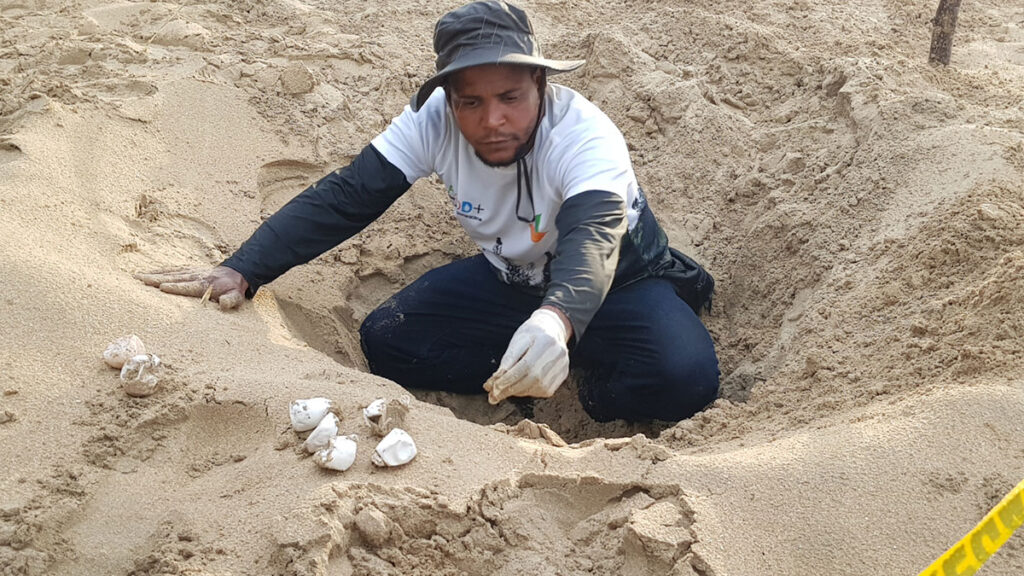
Three leatherback sea turtle nests were identified, fenced off, and protected, resulting in a total of 233 hatchlings that safely reached the sea. So far this season at Playa Esmeralda, not a single turtle has been hunted, nor has a single nest been raided—a great source of pride for them.
“In May, we had the opportunity to record the hatching of the first leatherback sea turtle nest in the area, in a video that also captures the feelings of the public, private, and community institutions participating in the project, which I am sharing with you along with this communication. I hope it generates the same excitement in you as it did in all of us,” said its president, Yamil Salas.
Question: How many members does Promiches have?
Answer. 13 members, including: Development Sicuani, SA (owner of the Club Med Miches Playa Esmeralda project), Holiday Village of Punta Cana, SA (operator of the Club Med Miches Playa Esmeralda project), Inversiones La Querencia, SA (owner of the Four Seasons Tropicalia project), Miches Development Group, SA (owner of the Maralda Project), NC12, SRL (owner of the Secrets and Dreams Playa Esmeralda projects), Inmobiliaria Sol Punta Cana, SRL (owner and operator of the Ciudad Esmeralda project), Desarrollo Punta Hicaco, SRL (partner in the Ciudad Esmeralda project), Viva Miches, SAS (owner and operator of the Viva Miches project).
Q. Why Emerald Beach?
R. Miches had remained isolated from the rest of the country for many years. This has meant that, as part of El Seibo province, it remains among the five poorest provinces in the country. However, from an environmental perspective, the excellent state of conservation of Miches’ natural resources, and especially Playa Esmeralda, presents an opportunity for developing a tourism offering that integrates these natural resources into an innovative, low-density tourism model with absolute respect for the environment and social integration. To this end, the Public-Private Partnership Agreement for the Tourism Development of Miches anticipates the challenges of tourism development and provides the necessary solutions, from the public, private, and community sectors, to incorporate lessons learned from other destinations and, as we say at Promiches, to do things right from the start.
Q. When and why was the sea turtle monitoring and protection initiative created?
R. The sea turtle monitoring and protection initiative in Miches is a fundamental part of the comprehensive coastal management plan we are developing for Playa Esmeralda. To this end, we have promoted the creation of the Playa Esmeralda Public-Private Management Committee, which will be comprised of Promiches, the Miches Tourism Council, the Ministry of Tourism, the Ministry of the Environment, the Ministry of Public Works, SENPA, POLITUR, the National Police, INTRANT, the Miches City Council, and the El Cedro Municipal District. The idea is for all agencies responsible for coastal management in the Dominican Republic to collaborate from a single structure for the design and implementation of the Comprehensive Coastal Management Plan for Playa Esmeralda, which will necessarily contain initiatives to address issues of beach management, solid waste management, regeneration of the dune and coastal vegetation, restoration of coral reefs, including the review of the designs of the tourism projects planned in the area, to ensure that their development has a planned and controlled impact on the natural resources of the area, and does not diminish its capacity to provide environmental services and regenerate.
As part of this effort, we decided to support the work of the Ministry of Environment and Natural Resources in Miches since 2018, through the staff assigned to the area, for the protection of sea turtles. This support is crucial given the importance of their presence for the environmental balance of the region and their role as an indicator of the health of the coastal ecosystem. This 2021 season, we provided support with equipment and materials to enable the ministry staff to carry out their work, including sleeping mats, a tent, and flashlights. We also provided materials for fencing and marking the nests. Finally, we produced an awareness video about this year’s experience, presented from the perspectives of the public, private, and community sectors.
Q. Who is involved in this initiative and what is the logistics like?
R. Until a few years ago, Emerald Beach was a dangerous place for turtles. Hunters and poachers acted in collusion with certain authorities and without any qualms, to the detriment of the conservation of this endangered species. The acquisition of this land by established business groups and the permanent presence of their employees in the area have facilitated the monitoring of this beach and improved the safety of the turtles and their nests.
This new situation didn’t arise on its own; it required the constant work and commitment of the staff at the Ministry of Environment and Natural Resources (MIMARENA), who went above and beyond their official duties in the area. They raised awareness among members of the Dominican Navy, fishermen, employees of tourist properties in the area, and community members in general, so they would learn about the environmental value of turtles and how fortunate we are to receive them on our beaches every year.
The methodology involved patrolling the beaches, especially at night, hoping to find mothers ready to lay their eggs and protecting them during the event, which is when poachers take advantage of the situation to kill them for their meat and steal their eggs. The nests were then identified, their coordinates recorded, and they were fenced off to protect them from dogs and the passage of horses and vehicles. Monitoring continued for up to 63 days, until the hatchlings emerged. Finally, any remaining hatchlings were helped out, and a count of the eggs (hatched, undeveloped, and dead) was taken to update the corresponding record. Promiches contributed temporary signs to identify the nests, tents, sleeping mats, and flashlights. They also produced an awareness video about the importance of the species and its environmental relevance in the context of Miches and Playa Esmeralda.
The Ministry of Environment appointed staff from the Vice Ministry of Protected Areas, led by the Provincial Director, Carlos de la Rosa, and, at the field level, by Yonattan Mercado, administrator of the Laguna Redonda and Limón Protected Area, who has been carrying out this work of protecting sea turtles in Miches for three years.
Staff from the Tropicalia project, Emerald Bay, and other properties in the area, as well as the Dominican Navy, were involved in monitoring the area and contacting Ministry personnel regarding any activity. This demonstrates the high level of awareness achieved.
In 2009, while pursuing my master's degree in tourism at the University of Alcalá, I encountered a fascinating subject: Social Market Economy. It was the first time I had analyzed sustainability as an integral part of the business, not just the market. At a micro level, it's somewhat similar to Michael Porter and Mark Kramer's concept of Shared Value. And I believe there's a lot of this in the current understanding of sustainability. I think sustainability should be understood as a business strategy for managing environmental and social risks. It's also a tool that enhances a company's ability to manage relationships with its high-value strategic stakeholders, and therefore has the potential to add value to the brand.